
Japan has issued a rare “megaquake advisory” after a magnitude 7.5 earthquake struck off the eastern coast of Aomori, just south of Hokkaido, earlier this week. While the quake caused relatively modest damage—34 minor injuries and limited disruption to infrastructure—authorities say the tremor has temporarily increased the chances of a stronger seismic event in the region.
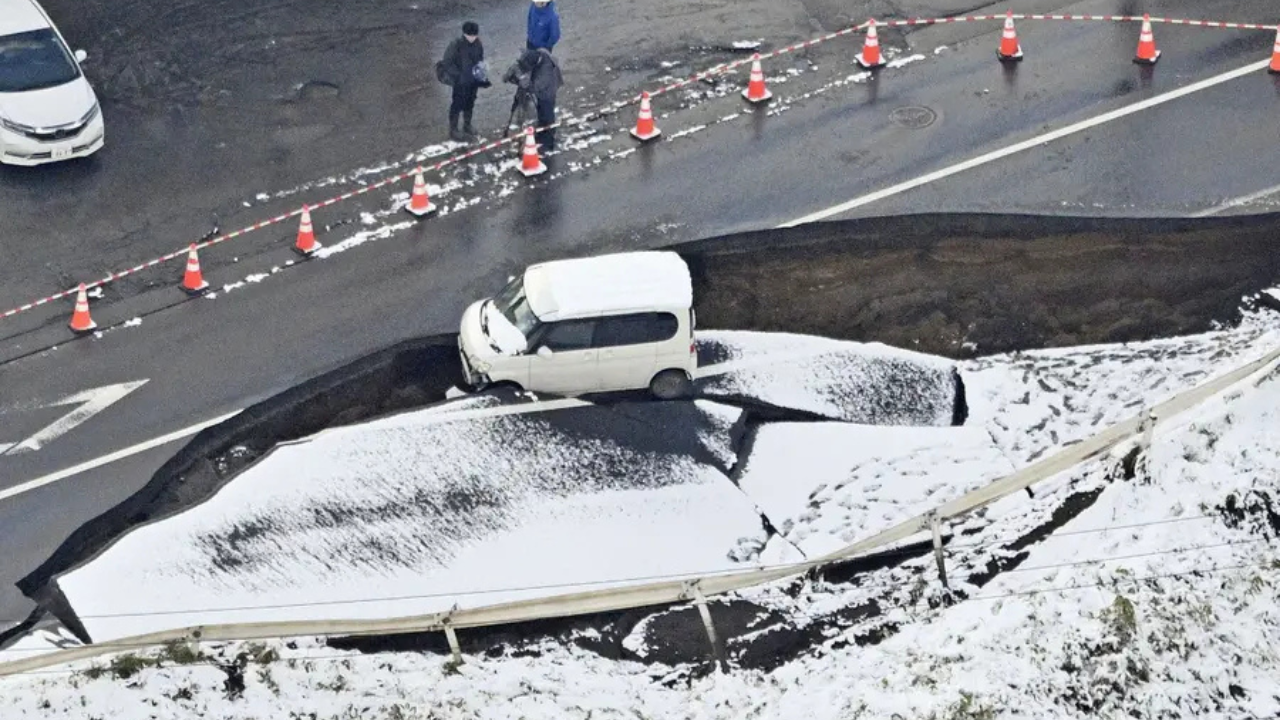
According to the Japan Meteorological Agency (JMA), the likelihood of a magnitude 8 or stronger quake remains low at around 1%, but the advisory aims to push residents toward stronger preparedness. Officials emphasised that the alert is not a prediction, but a precaution shaped by memories of the 2011 disaster, which killed nearly 20,000 people and triggered the catastrophic Fukushima nuclear crisis.
Why Northern Japan Faces Higher Seismic Risk
The 7.5 quake occurred near the Hokkaido–Sanriku coast, a region where the Pacific Plate subducts beneath Japan, forming the Japan Trench and Chishima Trench—zones known for producing some of the country’s most powerful historical earthquakes. Experts note that the deadly 2011 magnitude 9.0 earthquake and tsunami originated from the same trench system.
The JMA highlighted a striking pattern: the 2011 megaquake was preceded by a magnitude 7.3 earthquake just two days earlier, mirroring this week’s seismic activity.
That 2011 tsunami, which reached 15 metres in several areas, devastated Iwate, Miyagi and Fukushima, wiping out entire communities and severely damaging the Fukushima Daiichi nuclear plant. Concerns about radiation exposure persist to this day.
What a Future Megaquake Could Mean
Government projections warn that another offshore megaquake in the Hokkaido–Sanriku zone could unleash a 30-metre tsunami, potentially killing up to 1,99,000 people, destroying 2,20,000 buildings, and causing nearly 31 trillion yen (USD 198 billion) in economic damage. Authorities also fear that up to 42,000 people could suffer hypothermia if such a disaster occurs during the winter months.
The current advisory covers 182 municipalities from Hokkaido to Chiba Prefecture—one of the broadest alerts issued in recent years.
Officials say this alert is more precise than the 2024 Nankai Trough advisory, which caused public anxiety, panic buying and widespread event cancellations due to its vague wording.
Residents in coastal regions have been urged to stay alert, prepare emergency kits, and be ready to evacuate swiftly if needed.