
Artificial intelligence may be advancing at a rapid pace, but even the world’s leading experts cannot agree on how intelligent AI truly is — or whether it can ever match human abilities. A fresh debate has erupted between two of the most influential figures in AI: Google DeepMind CEO Demis Hassabis and renowned AI researcher Yann LeCun, formerly Meta’s chief AI scientist.
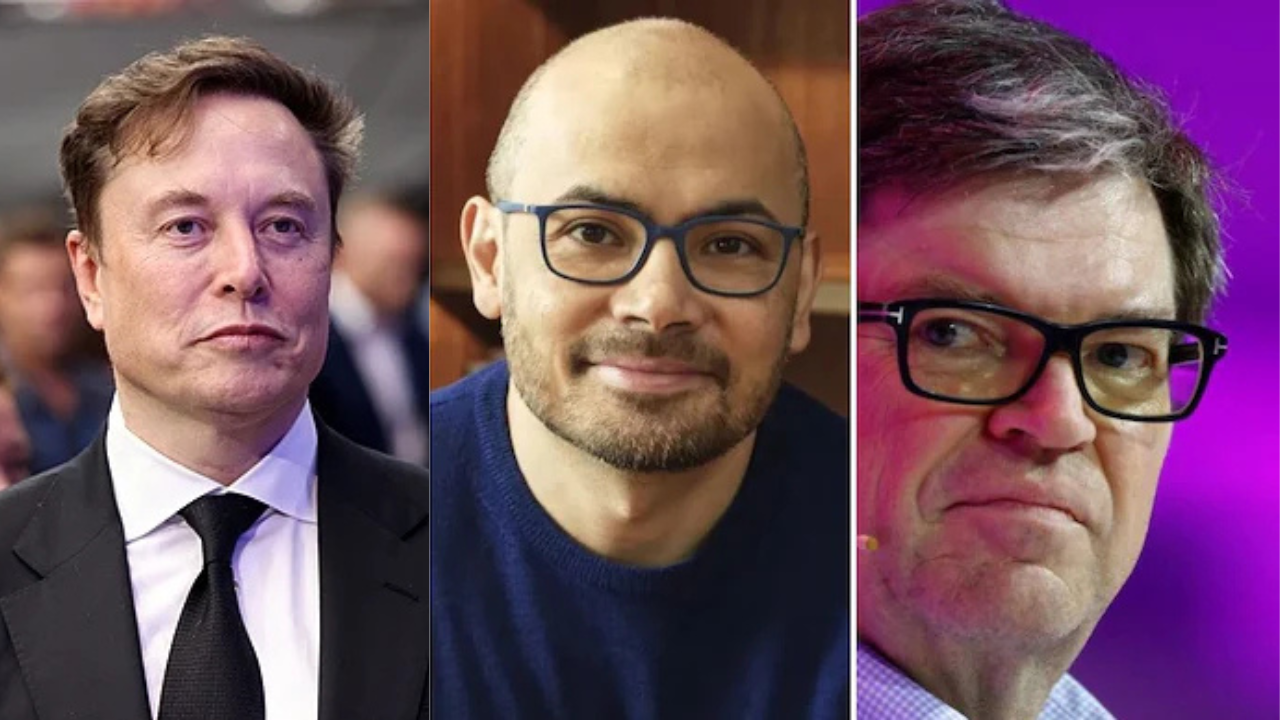
The disagreement centres on the concept of general intelligence, the “GI” in Artificial General Intelligence (AGI). The discussion has grown so intense that the two luminaries — a Nobel Prize winner and a Turing Award recipient — have taken their arguments to X (formerly Twitter), drawing widespread attention. Tesla and X owner Elon Musk has also weighed in, publicly siding with Hassabis.
What Is the AGI Debate About?
AGI refers to a hypothetical level of artificial intelligence that can think, learn, and reason across a wide range of tasks much like humans do. Unlike today’s AI systems such as ChatGPT or Gemini, an AGI would be capable of handling unfamiliar problems without prior training, adapting in real time just as people do.
However, current AI tools remain far from that goal. While they can crack complex exams, write code, and outperform humans in narrow domains, their overall understanding and adaptability still fall short — often compared unfavourably even to a young child’s real-world reasoning abilities.
This gap between impressive performance and limited understanding prompted Yann LeCun to make a controversial claim: general intelligence does not truly exist — not even in humans.
LeCun: Intelligence Is Always Specialised
LeCun argues that human intelligence evolved to solve specific biological and environmental challenges, making it inherently specialised rather than general. According to him, people excel in different areas based on circumstances, biology, and experience — not everyone can be a mathematical prodigy or a creative genius.
To illustrate his point, LeCun highlights chess. While computers can calculate millions of possible moves in seconds, even elite players like Magnus Carlsen can analyse only a limited number. This, LeCun says, proves that human intelligence is constrained and task-specific, unlike machine computation.
He has also expressed scepticism about current AI approaches that rely heavily on massive datasets. Instead, LeCun advocates for systems with richer memory, sensory input, and more holistic learning mechanisms.
Hassabis Pushes Back
Demis Hassabis strongly disagrees, responding that LeCun is “confusing general intelligence with universal intelligence.” According to Hassabis, human brains are among the most flexible and powerful learning systems known, capable of mastering a vast range of tasks despite biological limits.
Hassabis points to the concept of the Turing Machine, a theoretical model capable of performing any computation with sufficient resources. He suggests that the human brain is a biological approximation of this model — and that modern AI foundation models are increasingly moving in the same direction.
In his view, while neither humans nor machines are perfect or limitless, both are “general” enough to acquire a wide spectrum of skills through learning.
Elon Musk Joins the Conversation
Backing Hassabis, Elon Musk offered a brief but clear endorsement, writing simply: “Demis is right.” Musk has long cautioned about both the dangers and transformative potential of advanced AI, frequently stating that superintelligent systems are inevitable.
The Debate Continues
Despite the support for Hassabis, LeCun remains firm. In a follow-up post, he clarified that his primary objection lies in terminology. “I object to the use of ‘general’ to mean ‘human-level,’ because humans themselves are highly specialised,” he explained.
As AI continues to evolve, the clash between these two schools of thought highlights a deeper question: is intelligence truly general, or is it always shaped by limits and context? For now, the answer remains as contested as the future of AGI itself.