
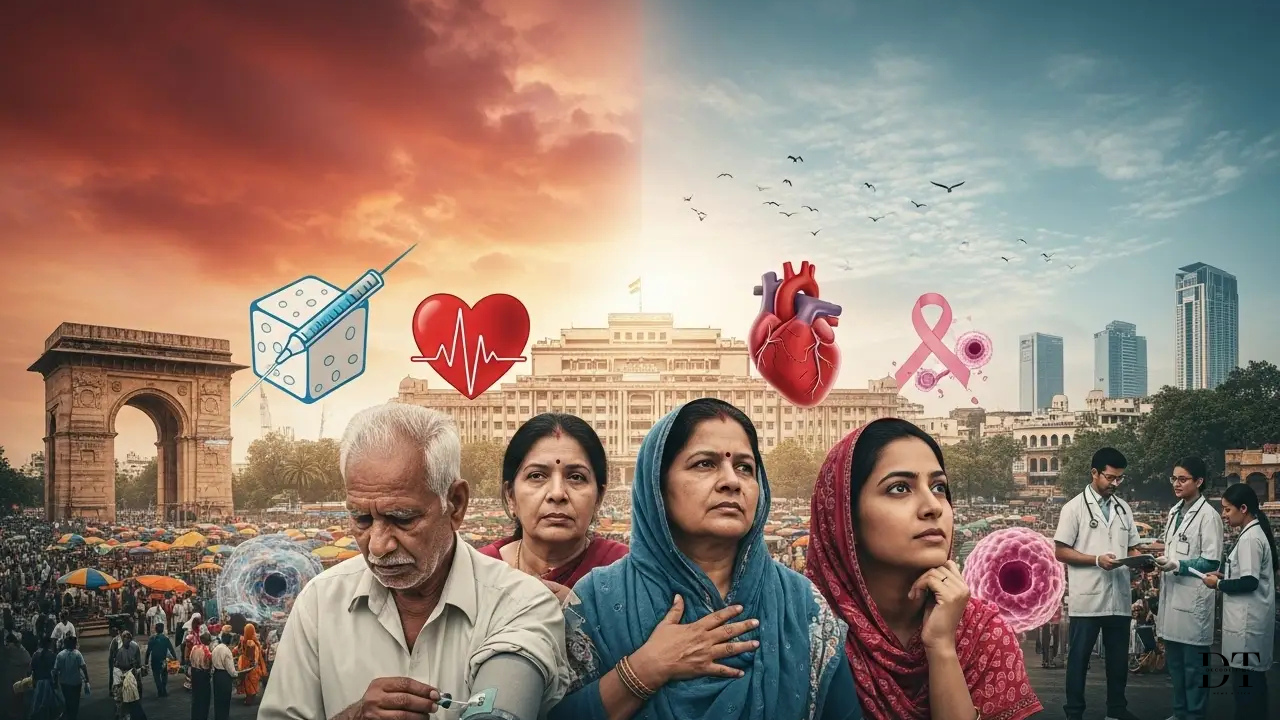
India is advancing rapidly in technology, economy, and global influence — but behind this progress lies a silent health crisis. Non-Communicable Diseases (NCDs), including diabetes, hypertension, and cardiovascular disorders, are rising at alarming rates. According to the World Health Organization (WHO), nearly 65% of deaths in India are caused by NCDs, costing the nation billions in productivity losses every year.
The Urban Lifestyle Shift
Once celebrated as the heart of India, villages are witnessing a steady migration of people to cities for economic opportunities. While urban living offers jobs and access to modern amenities, it has also brought sedentary lifestyles. Long commutes, desk-bound jobs, and screen-heavy entertainment have drastically reduced physical activity. Although gyms and fitness centers are now widely available, participation rates remain disappointingly low, making a sedentary lifestyle the norm.
Diet – The Biggest Casualty
Traditional Indian diets rich in grains, vegetables, and fiber are being replaced by fast food and ultra-processed meals. Affordable, convenient, and easily delivered, these foods are high in salt, sugar, and unhealthy fats. Over time, they have become a staple for many families, silently contributing to obesity, diabetes, and heart disease.
Tobacco, Alcohol, and Lifestyle Traps
India continues to have one of the world’s largest populations of tobacco users, and awareness about the dangers of smoking and smokeless tobacco remains limited. Adding to the concern, alcohol consumption is steadily increasing among young adults, further compounding the risk of NCDs.
Sleep – The Forgotten Pillar of Health
Sleep deprivation is now a public health issue. The rise of the 24/7 work culture, late-night entertainment, and round-the-clock social media usage have led to delayed and poor-quality sleep, especially among the youth. Call centers and IT firms with night shifts worsen the problem, as a 4-hour night sleep is not equivalent to 4 hours during the day. Chronic sleep loss weakens immunity, affects mental health, and increases the risk of lifestyle diseases.
Prevention Is Key
The lack of emphasis on preventive healthcare is a major contributor to India’s health crisis. Regular health check-ups, early screenings for diabetes and hypertension, and awareness campaigns could significantly reduce disease burden. As the saying goes, “An ounce of prevention is worth a pound of cure.”
The Road Ahead
Reversing India’s NCD epidemic requires a multi-pronged approach:
- Individual Action: Mindful eating, regular physical exercise, quitting tobacco and alcohol, and stress management through yoga and meditation.
- Community Effort: Urban planning with parks, cycling tracks, and pedestrian-friendly spaces to encourage active living.
- Educational and Corporate Responsibility: Schools, colleges, and workplaces should actively promote fitness and healthy habits.
- Media Role: Campaigns must highlight that small, consistent lifestyle changes create long-term health benefits.
- Government Intervention: Stronger preventive healthcare policies, affordable health screenings, and insurance coverage for preventive measures are crucial.
India stands at a crossroads — the choices made today will decide whether the country thrives with a healthy, productive population or struggles under the weight of chronic disease. The future of India’s health lies in the collective willpower of its citizens, policymakers, and society as a whole.